
L'Oral has announced its acquisition of a majority stake in Innovist, an Indian direct-to-consumer (D2C) personal care company, marking a significant expansion in India's rapidly growing beauty industry.

The Securities and Exchange Board of India (Sebi) has proposed allowing celebrity endorsements for its regulated entities like AMCs and stock brokers, but only at the brand level, not for specific products or services, as part of a major overhaul of advertisement codes.

Amazon CEO Andy Jassy announced an additional USD 13 billion investment in India, bringing the company's total capital commitment to USD 48 billion by 2030. This significant investment will primarily focus on expanding AI and cloud infrastructure, supporting job creation, boosting e-commerce exports, and digitising small businesses, aligning with India's growing digital economy.

Adani Group and Brazilian aerospace firm Embraer have selected Dholera, Gujarat, as the location for a final assembly line for Embraer's regional jets. This strategic collaboration, formalised by an MoU in January, aims to boost India's Regional Transport Aircraft programme and align with the Aatmanirbhar Bharat initiative and UDAN scheme. Embraer sees immense potential in the Indian market across various aviation segments.

Indian markets on Dalal Street rallied sharply as easing tensions in the US-Iran conflict and stable oil prices boosted sentiment. Track Nifty 50 and BSE Sensex performance and key global triggers.

Union Minister Ashwini Vaishnaw highlights the growing demand for AI-related jobs in India and the transformation needed in the IT industry. He also mentions significant investments in data centres and subsea cable networks to boost digital infrastructure.

Investors should do thorough due diligence when selecting a platform.

Indian liquor brands are increasingly focusing on Hindi heartland states like Uttar Pradesh, Rajasthan, and Haryana as the next major growth engine for premiumisation, driven by expanding luxury portfolios, craft spirit launches, and upgraded retail experiences, as state governments embrace reforms.

India's unemployment rate reached an 11-month high of 5.5 per cent in May, up from 5.2 per cent in April, according to the National Statistics Office, indicating a softening labour market as labour-force participation also eased.

Industry bodies representing alcoholic beverage manufacturers have welcomed the India-UK Free Trade Agreement (FTA), which will see tariffs on UK whisky and gin reduced, boosting bilateral trade and supporting premiumisation. However, domestic manufacturers are calling for state governments to withdraw concessions currently enjoyed by imported liquor brands.
Indian benchmark indices Sensex and Nifty closed higher, with the Sensex climbing 355.90 points, driven by positive state election results and better-than-expected Q4 earnings, despite ongoing geopolitical concerns.

Fintech unicorn Razorpay has confidentially filed draft documents with SEBI for an Initial Public Offering, with market sources estimating the issue size between Rs 5,000-6,000 crore. This move comes as a rival firm, PhonePe, has paused its IPO plans.

The National Stock Exchange (NSE) is expected to file its preliminary IPO papers with Sebi next week, marking a significant step forward for the long-awaited public offering which has been delayed for nearly a decade due to regulatory issues.

'I own a few cars that I have had specified minutely to my taste, and it does feel nice to know that there are no other vehicles like them anywhere in the world.'
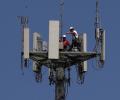
The Department of Telecommunications (DoT) has introduced a new authorisation regime, replacing multiple licences with a single permission for principal telecom services, aiming to simplify compliance and accommodate evolving technologies. This move is expected to ease business operations, enhance fraud prevention with AI, and expand connectivity, especially through satellite networks.

Indian benchmark indices Sensex and Nifty surged over 1 per cent, with the Sensex jumping 918.60 points, driven by strong buying in banking and financial counters and a positive trend in global equities, fuelled by hopes of easing West Asia tensions.

Indian benchmark indices, Sensex and Nifty, rallied significantly following a sharp decline in crude oil prices. This decline was triggered by US President Donald Trump's announcement of progress in negotiations with Iran towards a peace agreement, which led to renewed optimism in global markets.

'You set up your SIPs and you do not touch them. Not during COVID, not during a war scare, not when your neighbour tells you the market is finished. You let the noise pass over you.' 'The beauty of this approach is that it does not require courage or conviction in the moment. It just requires inertia -- keep the SIP running and do not look at your portfolio too often.'

Indian stock markets experienced a significant sell-off, with the Sensex tumbling over 1,300 points, driven by escalating crude oil prices due to US-Iran tensions and Prime Minister Narendra Modi's call for austerity measures, which amplified investor concerns about India's economic outlook.

Jio Platforms Ltd, the digital and telecommunications arm of Reliance Industries, has approved filing draft papers for an initial public offering (IPO) involving a fresh issue of up to 27 crore equity shares, aiming to unlock value for shareholders and fuel its ambitious expansion into 5G, AI, and global markets.

Foreign Portfolio Investors (FPIs) have withdrawn over Rs 62,853 crore from Indian equities in the first fortnight of June, bringing the total outflows for 2026 to Rs 2.87 lakh crore, surpassing the entire 2025 figure, driven by geopolitical tensions, global economic growth concerns, and a weakening rupee.

India's largest private refiner, Reliance Industries Ltd, successfully navigated a volatile energy market in the last quarter of FY26 by diversifying crude sourcing and demonstrating operational agility, particularly in response to geopolitical disruptions and cost fluctuations.

Prime Minister Narendra Modi announced that the India-UK Comprehensive Economic and Trade Agreement (CETA) will come into effect on July 15, 2026, anticipating a significant boost to bilateral trade and investment.
As India marks a decade of the Goods and Services Tax (GST), the focus is shifting towards enhancing efficiency through artificial intelligence, data sharing, and process simplification. The reform, which unified India's indirect tax system, has significantly broadened the tax base and boosted revenues, with future plans including a streamlined two-tier rate structure and continued technological integration to reduce compliance costs and combat evasion.

A new study predicts a 55 per cent surge in drone deployment across India's logistics and clean tech sectors over the next three years, driven by rapid digitalisation and the need for faster, more sustainable solutions. The Indian logistics market is projected to nearly double to USD 428.7 billion by 2033, highlighting a significant transformation in these key industries.

S&P Global Ratings projects India's economic growth to slow to 6.6 per cent in FY27, down from 7.7 per cent in FY26, citing energy stress and a potential sub-par monsoon.

India significantly increased its crude oil imports from Russia and the United Arab Emirates in June, securing supplies as the Strait of Hormuz began to reopen, with Russian barrels remaining attractive due to discounts and UAE supplies offsetting earlier uncertainties.

Say hello to the S 450 e Launch Edition. Priced at 2.20 crore upwards.

India's net direct tax collection has seen a robust 15 per cent increase, reaching approximately 5.21 trillion in the first two and a half months of FY27, as on June 17, driven by strong growth in both corporate and non-corporate tax segments.

Infosys co-founder Nandan Nilekani stated that artificial intelligence will amplify, not replace, IT firms, projecting a massive USD 400 billion AI-first services opportunity by 2030. Addressing shareholders, he highlighted Infosys's readiness to help clients navigate enterprise AI complexities and capitalise on the structural shift in technology.

The scheme, called 'Suhana Safar', targeted customers who aspire to own a car but were hesitant because of concerns around arranging the down payment or managing future EMI obligations.
Indian markets on Dalal Street rallied sharply as easing tensions in the US-Iran conflict and stable oil prices boosted sentiment. Track Nifty 50 and BSE Sensex performance and key global triggers.

Indian benchmark indices Sensex and Nifty closed marginally lower due to profit-taking, following the Reserve Bank of India's decision to keep the repo rate unchanged while lowering its growth expectations for the current fiscal year and forecasting higher inflation.

Indian benchmark indices Sensex and Nifty closed lower for the second consecutive day, driven by investor caution over conflicting geopolitical signals from West Asia and fresh foreign institutional investor (FII) outflows.

Indian equity benchmark indices Sensex and Nifty closed lower on Thursday, driven by escalating tensions between the US and Iran, persistent foreign fund outflows, and concerns over rising US inflation.

Indian benchmark indices, Sensex and Nifty, closed sharply higher, with the Sensex climbing 1,695.40 points and the Nifty surging nearly 2 per cent, driven by a global market rally and a decline in crude oil prices following US President Donald Trump's declaration that his country has ended the war with Iran.

Indian benchmark indices Sensex and Nifty rebounded in early trade after three days of decline, driven by a rally in Sun Pharma following its USD 11.75 billion acquisition of US-based Organon & Co, alongside a positive trend in global equity markets.

Former IPL Commissioner Lalit Modi, who claims that there is no wrongdoing by him in the legal cases faced by him in India, has said that he was born with "a diamond spoon", has a kingsize lifestyle, travels everywhere and that "Rs 10-12 crore" may not last with him a week.

The asymmetry in deposit and credit growth is the biggest challenge before the Indian banking industry. For every 100 deposit that a bank mobilises, it needs to keep 3 with the banking regulator in the form of cash reserve ratio on which it doesn't earn any interest. Another 18 is used for buying government bonds (statutory liquidity ratio). This means, a bank is left with 79 for giving credit. Add to this, its capital which can be used for giving loans. Most banks are facing a fund crunch. They need to find ways to attract deposits if they want to sustain credit growth, explains Tamal Bandyopadhyay.

Kunal Shah, founder of CRED, has been appointed global head of WhatsApp, joining a growing list of Indian-origin executives leading major technology companies worldwide. This trend underscores the increasing demand for Indian talent in strategic leadership roles across Silicon Valley.
